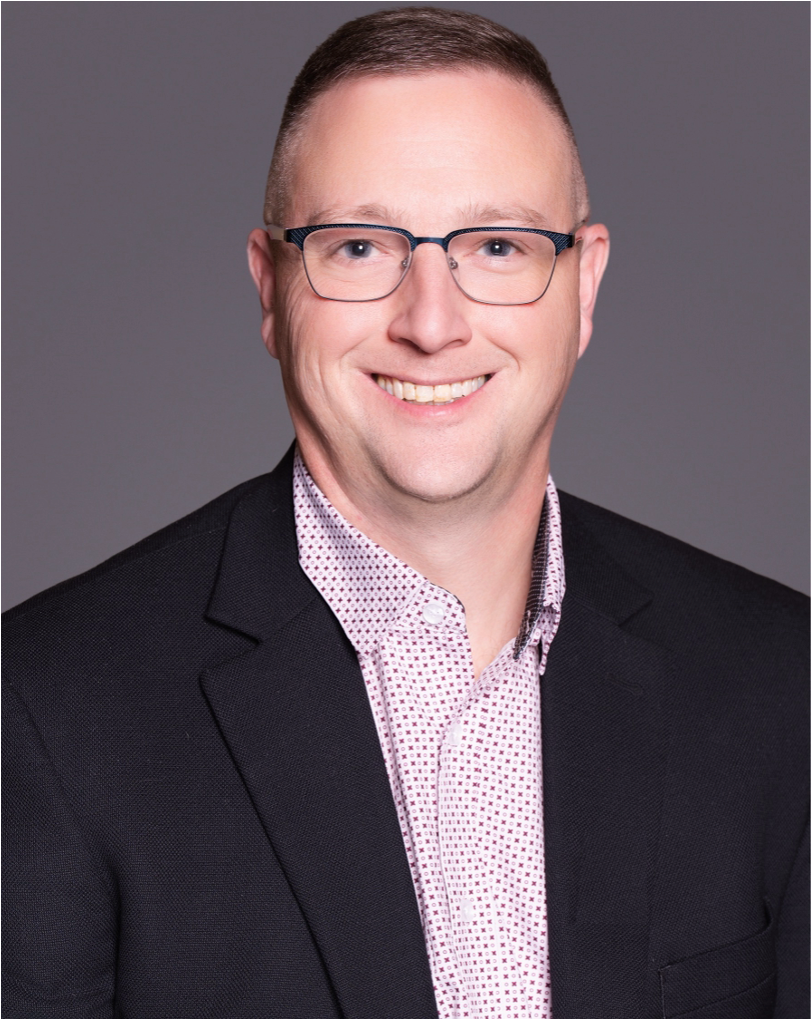
A. Joseph Tamer
Personal Narrative
My Roots
The “A” in A. Joseph Tamer stands for Assad, a connection to a family and culture that have shaped much of who I am. I was adopted by a Maronite Catholic Lebanese couple, and named after my grandfather. I grew up to be their 6'2", fair-skinned, blue-eyed son in a family where my parents were 5'4" and 5'0", with olive oil skin and jet black hair. I have always been able to laugh about how obviously I stood out in family photographs, but underneath the humor was a question I began wrestling with early: Who am I, and where do I fit?
The answer was complicated in the best possible way. I was completely part of a close-knit Lebanese-American family and community even though I did not look like anyone around me. I grew up surrounded by extended family, food, faith, stories, and the entrepreneurial spirit of my father, who built and operated a successful family business. From him, I learned that building something requires persistence, resourcefulness, personal relationships, and a willingness to take responsibility when something needs to be done. Those lessons have stayed with me as I have built programs, teams, partnerships, and organizations throughout my own career.
Looking back, I think those early experiences of simultaneously belonging and standing apart made me unusually attentive to community and identity. Figuring out who I was and how I fit into the world became a recurring question in my own life, and perhaps explains why I have been drawn throughout my career to helping young people navigate those same questions for themselves.
Learning How to Learn
I came to the University of Rochester from a very small high school with a graduating class of just 47 students. It was the kind of place where teachers knew their students well, relationships mattered, and it was difficult to disappear into the crowd. Academically, high school had come relatively easily to me. Rochester was different. Suddenly I was surrounded by talented students from much larger schools, and many seemed to arrive already knowing how to succeed in an environment that was completely new to me.
College taught me how to learn. I had to figure out how to ask for help, manage competing demands, study deliberately, and persist when understanding did not come immediately. In retrospect, struggling academically for the first time was one of the most valuable experiences of my education. It gave me empathy for students who are stretching beyond what has previously worked for them and taught me that productive struggle, paired with the right support, can build both competence and confidence.
It also helped me recognize something I had taken for granted about my own schooling. I thrive in educational communities where people know one another. That experience has stayed with me throughout my career and helps explain why small independent-school classrooms have always felt so natural to me: high expectations are powerful, but they become more powerful when teachers know their students well enough to recognize when to challenge, encourage, question, or simply listen.
College itself was wonderfully broad. I loved science and served as a teaching assistant in several courses, but I also studied religion, environmental policy, and management as well. I played hockey and eventually captained the team, worked throughout college, and served on the parish council at the Interfaith Chapel. My first NASA internship at Kennedy Space Center led to another at Ames Research Center and ultimately to graduate work in molecular biology and the origins of life through NASA’s emerging Astrobiology program. I later returned to Ames to help lead the NASA Astrobiology Academy, working with students and scientists as part of summer residential at Stanford for the next three years.
Finding My Vocation in Schools
Graduate school taught me something unexpected: I loved learning and teaching science more than I loved doing laboratory research every day. When a Biology position opened at Emma Willard School, I decided I would teach for a year before returning to science. One year became six, and ultimately teaching became a 14-year chapter of my career.
In some ways, independent schools felt familiar from the beginning. The classrooms were small enough for teachers to know students as individuals, and education extended through advising, athletics, activities, meals, dormitories, and countless informal conversations. I recognized something of the educational community I had experienced growing up, but now I was experiencing it from the other side of the desk.
Those years took me through five independent schools and increasingly broad responsibilities. At Emma Willard, I became a teacher, advisor, coach, and residential educator. At Marianapolis, I joined senior leadership as Dean of Students and Director of Residential Life, helping rebuild and grow the school while supervising residential faculty and supporting students and families. A family health situation brought us to Arizona in 2011, where I continued that work at Rancho Solano Preparatory School.
Eventually, family needs influenced another professional choice. As my own children became increasingly busy adolescents, I stepped away from administration so I could be more present in their lives. I returned to the classroom at Phoenix Country Day School and Loyola Academy. That decision reinforced something I have come to believe deeply: careers do not always progress in straight lines, and leadership is not defined by continually pursuing the next title. Sometimes the right decision is the one that best serves the people who depend on you.
Education Through Exploration
In 2016, an opportunity at Arizona State University brought together parts of my life that had previously followed separate paths. NASA science had launched my early career. Independent schools had taught me how much I loved education. I had also become increasingly interested in how technology could help students learn through exploration rather than simply receive information. Infiniscope brought all three together: NASA science, teaching and learning, and emerging educational technology.
For the next several years, I worked alongside educators, scientists, learning designers, and technologists to explore what digital learning could make possible. We created simulations that allowed students to manipulate systems they could never reproduce in a classroom, immersive experiences that transported them to places they could never visit, and adaptive lessons that responded differently depending on what students understood. Just as importantly, we spent hundreds of hours with teachers and students, learning how these resources actually worked in classrooms and improving them based on what we observed.
By 2020, the ETX Center faced several challenges simultaneously. Our initial NASA project was approaching its end, the commercial technology platform supporting our courseware had been acquired and was being discontinued, and the pandemic moved our work entirely online. As Deputy Director, I helped our team navigate that transition. We partnered with Carnegie Mellon University’s Open Learning Initiative to co-develop Torus, an open-source learning platform, while migrating thousands of pages of existing courseware and pursuing a new generation of projects.
What followed was one of the most creative periods of my career. We developed REAL CHEM, evidence-based courseware designed around Relevant, Engaging, Active Learning; created tools such as Tour It and Simple Author so educators could build their own digital experiences; trained hundreds of teachers around the country; and continued studying what worked for students and why. Through CourseWorks, we eventually built shared infrastructure and a nonprofit distribution model designed to sustain this work and reinvest in research, technology, and continuous improvement.
What I value most about that period, however, is the team we built. Educators, learning designers, researchers, software developers, business professionals, faculty, and institutional partners learned how to combine very different forms of expertise around a common purpose: creating learning experiences that are engaging, affordable, measurable, and capable of improving student success at scale.
Finding My Way Back to Boarding-School Life
Over the past two years, my work shifted again as I took on leadership of CourseWorks. The role increasingly brought me onto college and school campuses around the country, working directly with educators and institutional partners rather than requiring me to be in Tempe every day. That flexibility created an unexpected opportunity for our family: we could return to New England when my wife joined the faculty at Fay School, an international boarding school.
We now live on the Fay campus, where my wife serves as a Spanish teacher and residential faculty. After many years away from boarding schools, I once again find myself surrounded by the familiar rhythms of residential life: students moving between classes and activities, faculty conversations that continue well beyond the school day, weekend events, meals, traditions, and the countless informal interactions through which a school becomes a community.
I had not realized how much I missed it until I was living in it again. Returning to a boarding school campus has reminded me why independent schools became such an important part of my life in the first place. There is something distinctive about communities where adults know students in multiple contexts and where teaching, advising, coaching, residential life, and ordinary human relationships reinforce one another. In some ways, that sense of being known brings me all the way back to the tiny school community where my own education began. Living at Fay has not simply reminded me of an earlier chapter of my career; it has helped me recognize that this is a kind of community in which I would like to spend the next one.
What Comes Next
I now serve as Interim Director of the Center for Education Through Exploration. My responsibility in this chapter is different from what came before: helping ASU determine what the Center should become next. I am working with university leadership to establish an advisory structure, evaluate the Center’s programs and financial model, navigate organizational transition, and prepare for the selection of its next faculty director.
The timing has also prompted reflection in my own life. Infiniscope has reached the natural conclusion of its NASA-funded work. My children, whose needs influenced important career decisions along the way, have now graduated from ASU and begun building lives of their own. My wife and I have returned to the kind of school community where we first imagined building our careers. For the first time in many years, the question of what comes next feels unusually open.
As I consider that question, I find myself returning to the themes that have persisted across an otherwise unconventional career. I enjoy helping people learn. I thrive on building teams around difficult problems and turning ambitious ideas into programs that actually work. I value institutions where relationships matter and where education is connected to character, community, and purpose. I am energized by change when it creates the opportunity to build something better, but I have also learned to listen carefully before deciding what should change.
From a family shaped by immigration, adoption, faith, and entrepreneurship to NASA laboratories, boarding-school dormitories, middle-school classrooms, university leadership, and national education initiatives, the settings have changed considerably. The underlying work has been surprisingly consistent: learn deeply, build relationships, help people grow, solve problems, and leave institutions stronger than I found them. Those are the experiences and values I carry with me as I consider the next chapter.