A. Joseph Tamer
RESEARCH & EVALUATION
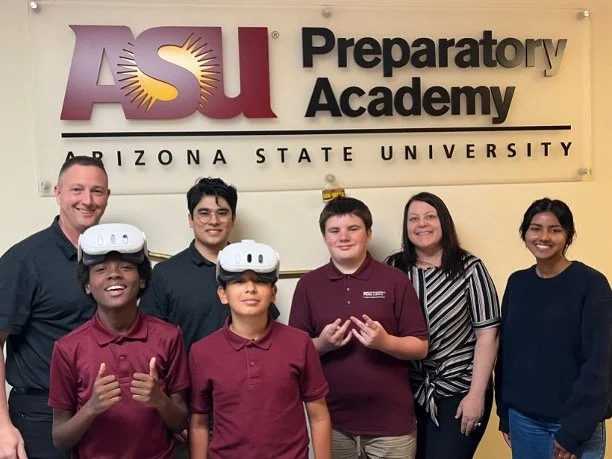
I believe educational research is strongest when it stays connected to real classrooms. Through Infiniscope, my ETX colleagues and I have spent hundreds of hours observing teachers and students, field testing new learning experiences, and using what we learn to improve our designs. That work also created opportunities for me to mentor Barrett Honors College students through their honors theses, helping emerging researchers investigate authentic questions about teaching, technology, and learning.
Student Research & Field Testing
Innovative Curriculum Development
I have worked on curriculum innovation from national frameworks to classroom implementation. Through NSF STEM Futures, I helped convene 105 educators from 53 institutions to rethink the knowledge and skills students need for 21st-century STEM learning. With NASA Infiniscope, our team translated that philosophy into practice by aligning digital learning experiences with NGSS standards and developing lesson plans and resource guides that helped educators integrate them into existing curricula.

Impact on a National Scale
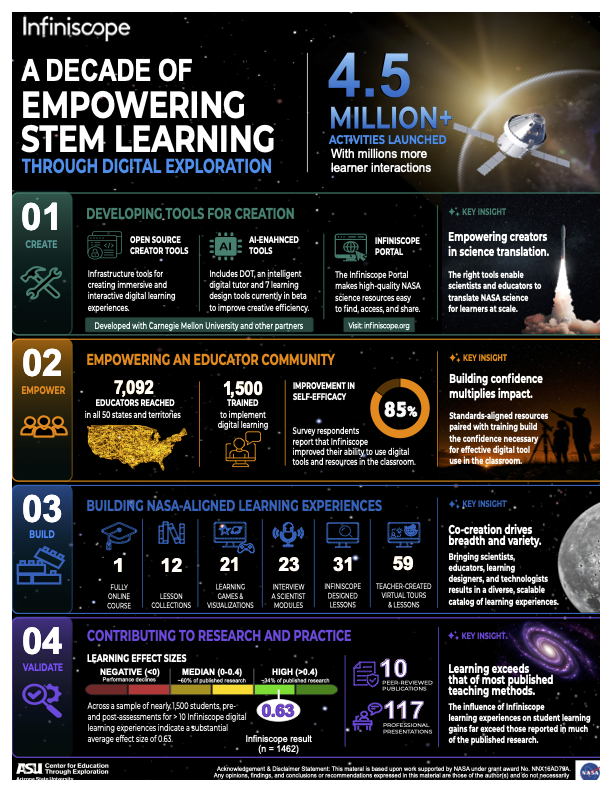
Over a decade, NASA Infiniscope grew into a national STEM learning ecosystem, generating 4.5M+ learner interactions and engaging more than 7,000 educators across all 50 states and territories. We trained 1,500 educators in digital learning, with 85% reporting greater confidence using digital tools. Evaluation of nearly 1,500 students found a strong average learning effect size of 0.63, while our work contributed to 10 peer-reviewed publications and 111 professional presentations. A comprehensive summative report brings together findings from our internal research team and external evaluators to document the project’s reach, effectiveness, and lessons learned.
Academic Research & Conference Presentations
My research portfolio includes 16 presentations at the American Geophysical Union and National Assessment Institute annual conferences over the past decade. Across this work, a consistent theme is how active learning can translate meaningfully into online environments: connecting students with authentic places, data, and scientific questions while measuring impact on learning. Equally important is empowering educators with practical tools, professional development, and evidence they can use to strengthen learning in their own classrooms.